Prambanan, Mostly from Wikipedia
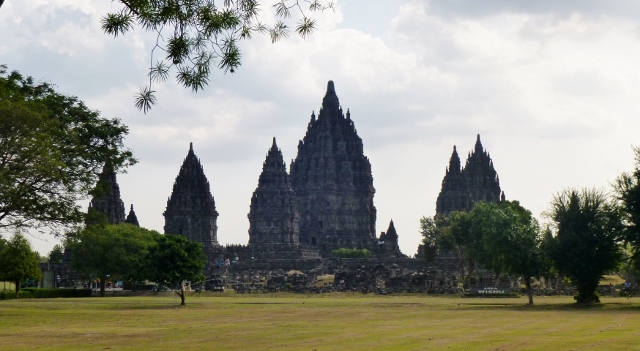
Candi Prambanan or Candi Rara Jonggrang is a 9th-century Hindu temple compound in Central Java, Indonesia, dedicated to the Trimurti, the expression of God as the Creator (Brahma), the Preserver (Vishnu) and the Destroyer (Shiva). The temple compound is located approximately 17 kilometres (11 mi) northeast of the city of Yogyakarta on the boundary between Central Java and Yogyakarta provinces.[1]
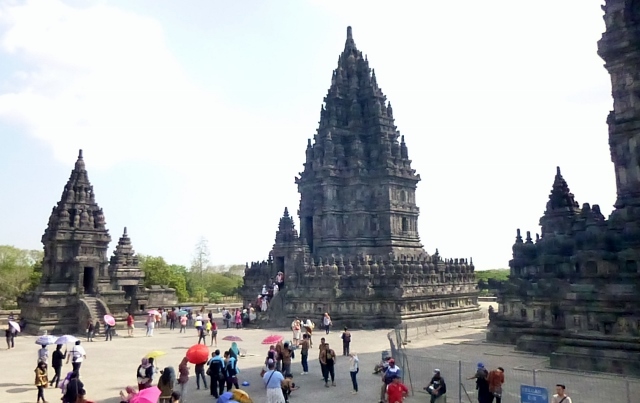
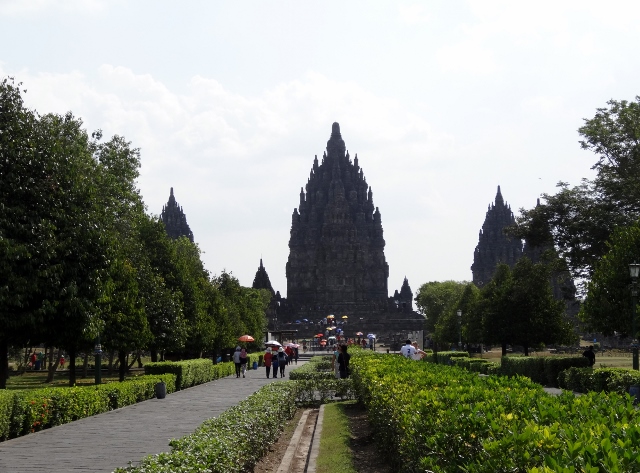
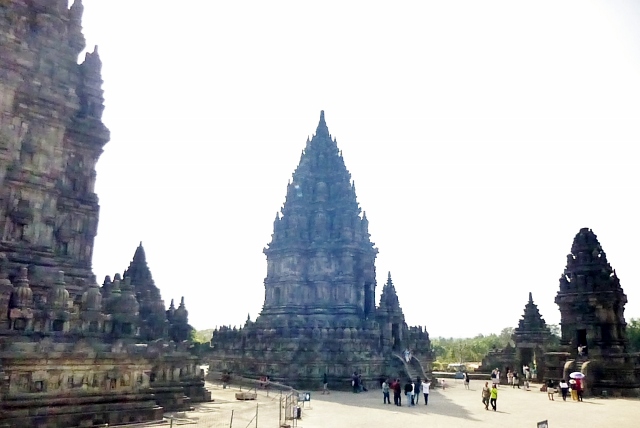
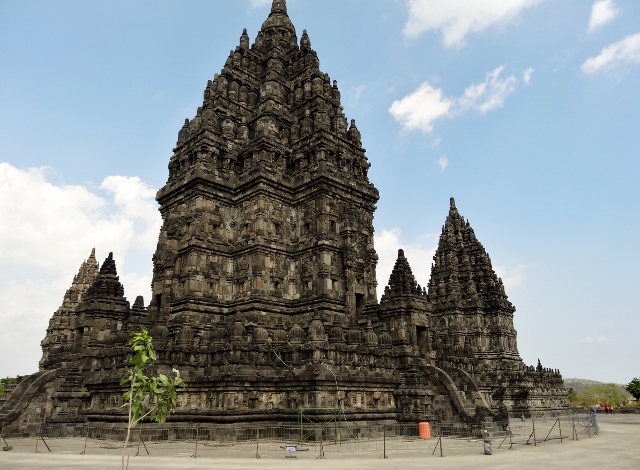
The temple compound, a UNESCO World Heritage Site, is the largest Hindu temple site in Indonesia, and one of the biggest in Southeast Asia. It is characterized by its tall and pointed architecture, typical of Hindu temple architecture, and by the towering 47-metre-high central building inside a large complex
of individual temples.
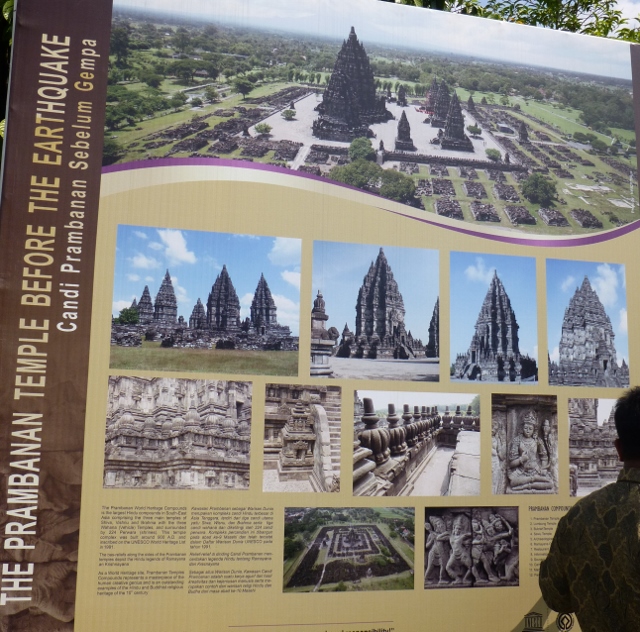
This information does not take account of damage caused by the 2006 Java earthquake
Originally there were a total of 240 temples standing in Prambanan. The Prambanan Temple Compound consist of:
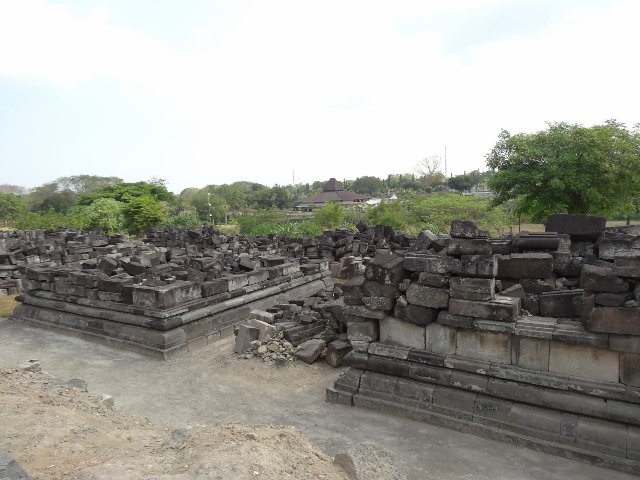
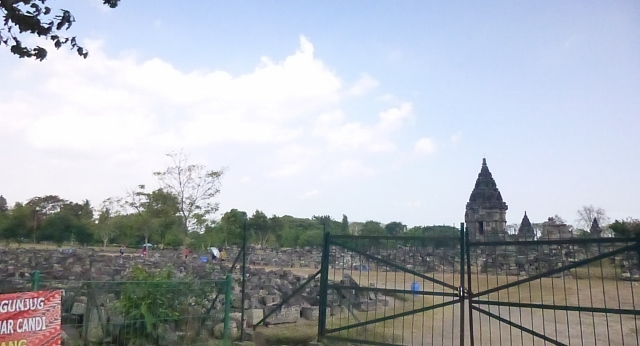
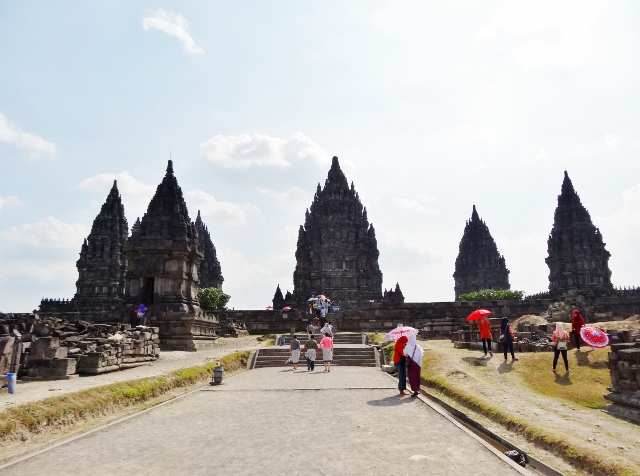
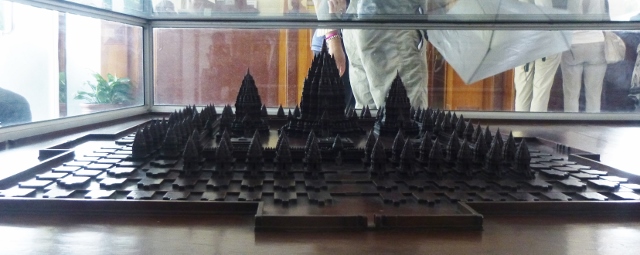
The Prambanan compound also known as Rara Jonggrang complex, named after the popular legend of Rara Jonggrang. There were once 240 temples stood in this Shivaite temple complex, either big or small.[12] Today, all of 8 main temples and 8 small shrines in inner zone are reconstructed, but only 2 out of the original 224 pervara temples are renovated. The majority of them have deteriorated; what is left are only scattered stones. The Prambanan temple complex consists of three zones; first the outer zone, second the middle zone that contains hundreds of small temples, and third the holiest inner zone that contains eight main temples and eight small shrines.
The Hindu temple complex at Prambanan is based on a square plan that contains a total of three zone yards, each of which is surrounded by four walls pierced by four large gates. The outer zone is a large space marked by a rectangular wall. The outermost walled perimieter, which originally measured about 390 metres per side, was oriented in the northeast, southwest direction. However, except for its southern gate, not much else of this enclosure has survived down to the present. The original function is unknown; possibilities are that it was a sacred park, or priests' boarding school (ashram). The supporting buildings for the temple complex were made from organic material; as a consequence no remains occur.
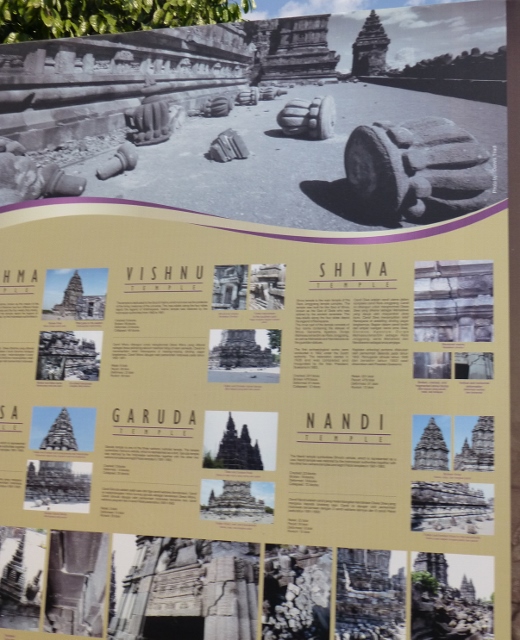
The inner zone or central compound is the holiest among the three zones. Its the square elevated platform surrounded by square stone wall with stone gates on each four cardinal points. This holiest compound is assembled of eight main shrines or candi. The three main shrines, called Trimurti ("three forms"), are dedicated to the three Gods: Brahma the Creator, Vishnu the Keeper, and Shiva the Destroyer.
The Shiva temple;
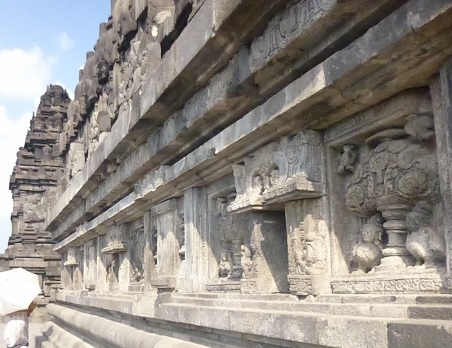
The Shiva temple is the tallest and largest structure in Prambanan Loro Jonggrang complex, it measures 47 meters tall and 34 meters wide
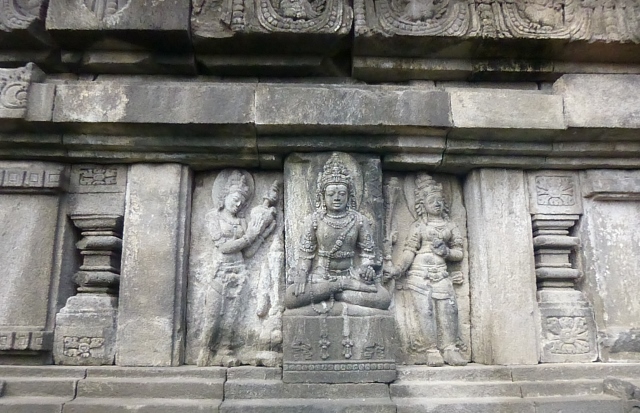
. The Shiva temple encircled with galleries adorned with bas-reliefs telling the story of Ramayana carved on the inner walls of the balustrades. To follow the story accordingly, visitors must enter from the east side and began to perform pradakshina or circumambulating clockwise. The bas-reliefs of Ramayana continued to Brahma temple galleries.
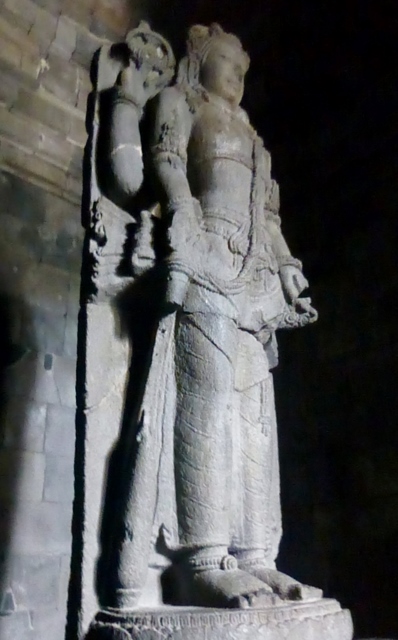
The Shiva shrine located at the center and contains five chambers, four small chambers in every cardinal direction and one bigger main chamber in central part of the temple. The east chamber connect to central chamber that houses the largest temple in Prambanan, a three meter high statue of Shiva Mahadeva (the Supreme God). The statue bears Lakçana (attributes or symbol) of Shiva such as skull and sickle (crescent) at the crown, and third eye on the forehead, also four hands that holds Shiva's symbols: a prayer beads, feather duster, and trisula (trident). Some historians believe that the depiction of Shiva as Mahadeva also meant to personify king Balitung as the reincarnation of Shiva. So, when he died, a temple was built to commemorate him as Shiva.[13] The statue of Shiva stands on lotus pad on Yoni pedestal that bears the carving of Nāga serpents on north side of pedestal.
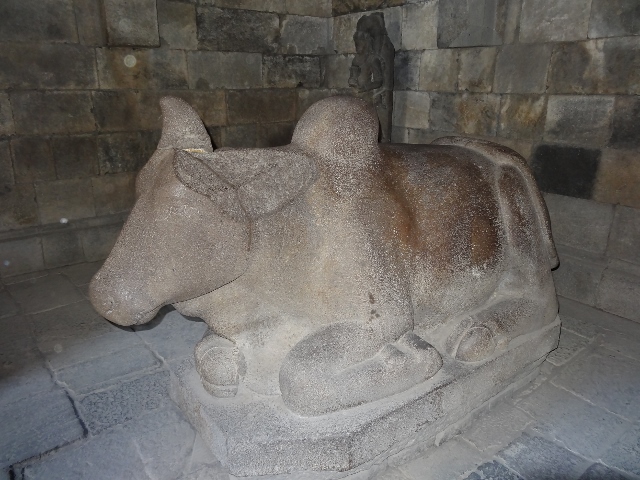
The other three smaller chambers contain statues of Hindu Gods related to Shiva; his consort Durga, the rishi Agastya, and Ganesha, his son. Statue of Agastya occupy the south chamber, the west chamber houses the statue of Ganesha, while the north chamber contains the statue of Durga Mahisasuramardini depicting Durga as the slayer of Bull demon. The shrine of Durga is also called the temple of Rara Jonggrang (Javanese: slender virgin), after a Javanese legend of princess Rara Jonggrang.
2006年5月27日に起きたジャワ島中部地震で甚大な被害を受けた。地震発生の約2か月後、インドネシア政府の要請で日本から調査団が派遣された[1]。
2007年1月から修復作業が開始され、日本の第二次調査団が同年2月に派遣、同年3月には、日本は「草の根文化無償資金協力」にてプランバナン遺跡修復専門機関のジョクジャカルタ特別州考古学局に対し、文化財修復機材を購入するための資金を供与した[2]。
2009年6月現在、チャンディ・ナンディとチャンディ・ガルーダの修復がようやく完了したのみで、全体の修復については目処すら立っていない。
Indonesia/Prambanan(プランバナン)